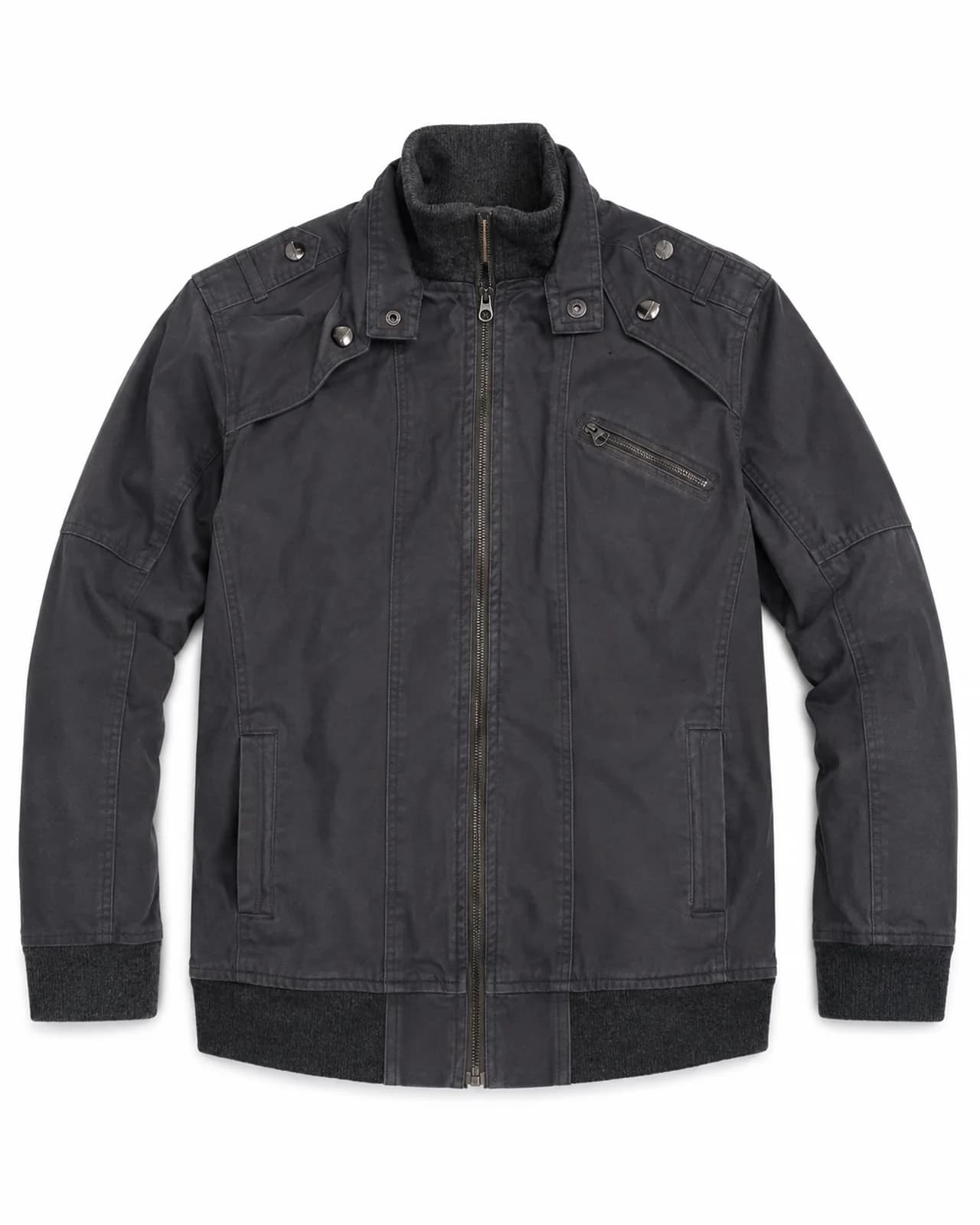
Denim · Development available
A heavier denim jacket with a work jacket's pockets and a denim jacket's wash, where the hardware has to go through the wash with the fabric and come out intact.
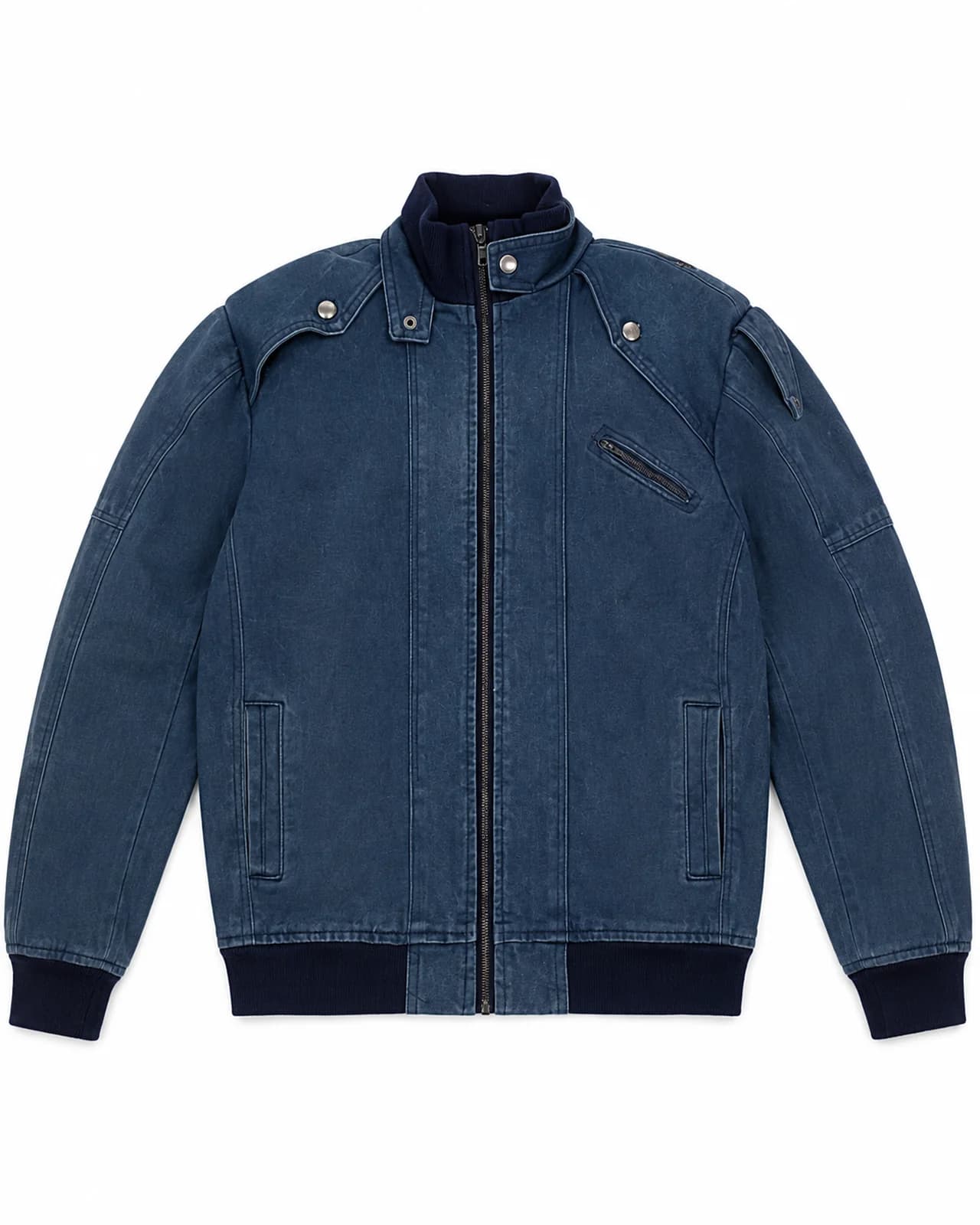 AI render
In short
A denim utility jacket is specified by denim weight (mid-weight, around 10-14 oz), the wash, shrinkage, pocket layout, zip or button front, hardware and its finish, collar, cuffs and lining. Washing is hard on zips, rivets and snaps, so hardware is approved after it has been through the wash on the sample.
Construction choices
- Mid-weight denim
- Heavy enough to protect and hold its shape, light enough to wear all day.
- Hardware
- Zips, rivets and snaps chosen to survive the wash without rusting or marking the denim.
- Panel seams
- Vertical seams with topstitching that define the jacket's look.
- Rib or button cuffs
- Rib for a bomber style, buttoned cuffs for a trucker style.
- Lining
- Unlined, blanket-lined or quilted.
Construction
AI render- 1
Rib stand collar
A stand collar with a knitted rib lining. Collar height and the rib are set in the specification.
- 2
Snap-tab collar
Tabs fastened with press studs. Hardware type and finish are specified per order; denim washes can mark hardware, so the wash is tested with it.
- 3
Zipped chest pocket
An angled zip pocket on the chest. Zip type and length are set in the specification.
- 4
Panel seams with topstitching
Vertical panel seams with topstitching down the front. Thread colour and stitch density are part of the specification.
- 5
Rib hem
A knitted rib band at the hem. Rib composition, and how it takes the wash, are confirmed on the sample.
Marked on an AI render of the style. Denim weight, wash, shrinkage, stitch types and labels are specified per order and are not shown here. No feature above is standard on every jacket.
Size chart
The points a size chart for this garment needs, and how each is taken. Give every one a value and a tolerance for each size, and measure the sample after washing.
| # | Point | How it is measured |
|---|---|---|
| 01 | Chest | Measured flat, 2.5 cm below the armhole, closed, after washing. |
| 02 | Body length | High point of shoulder to hem. |
| 03 | Sleeve length | Centre back neck to cuff. |
| 04 | Hem width | Across the hem band. |
| 05 | Shrinkage | Length and width change after the stated wash. |
- Fabric options
- Rigid or stretch denim, right-hand or broken twill
- Typical weight
- 10-14 oz/yd² (about 340-475 gsm)
- Wash
- Rinse, enzyme or stone, against an approved reference
- Hardware
- Buyer-nominated, tested through the wash
- Minimum quantity
- Discuss with commercial team
- Sampling
- Discuss with commercial team
- Lead time
- Discuss with commercial team
Weights shown are typical ranges for this product class, given for orientation only. Final composition, weight, construction and finish are confirmed against your specification during development.
Logo positions
- Left chest
- Centre back, large
- Sleeve
- Leather or woven patch
Decoration methods
- Embroidery
- Applied patches
- Screen print
- Leather patch
Already buying?
Already buying this denim utility jacket? Let us benchmark it.
Share your existing specification, construction requirements and estimated quantity for a manufacturing and FOB costing review of the same denim garment. There is no instant price: a comparison is only useful when both quotations describe the same article.
01
You send the reference
The current denim garment's tech pack, or clear photographs with its measurements. Add the quantity and destination.
02
AHM reviews the construction
Denim weight, weave and stretch, wash and its reference, shrinkage, seam type, hardware, labels and packing, read from the reference rather than assumed.
03
Open points are clarified
Anything the reference leaves open is asked about before costing, so the price answers the question you asked.
04
An FOB quotation is prepared
On the same basis as the denim garment you buy now, so the two can be compared line by line. The final price depends on the confirmed specification and commercial approval.
Buyer questions
Stone and enzyme washes abrade and can corrode metal, and metal can stain denim. Approve the hardware on a washed sample.
Yes, and that is usual for logos, so the wash does not distort the embroidery. Large back designs are often done on the panel before assembly.
Around 10-14 oz per square yard is common. Heavier is tougher and stiffer; lighter is easier to wear.
A tech pack, a reference garment or a written requirement is enough to start. We come back on construction, materials and FOB costing.
Explore next
Explore next
All denim
Weight, weave, sanforisation and wash decide how a denim garment ages. All four are specification decisions taken before the first sample.
Denim Work Shirt
A denim shirt that works: a lighter denim or chambray, twin chest pockets and felled seams, washed so it is soft from the first wear and does not shrink after it.
Denim Work Trouser
Work jeans and carpenter trousers: heavier denim, triple-needle seams, bar-tacked pockets and, often, a hammer loop and a rule pocket for the people who use them.
Denim Weights, Weaves and Washes Explained for Buyers
Denim is a warp-faced cotton twill, usually 3x1, with an indigo-dyed warp and an undyed weft.