Materials
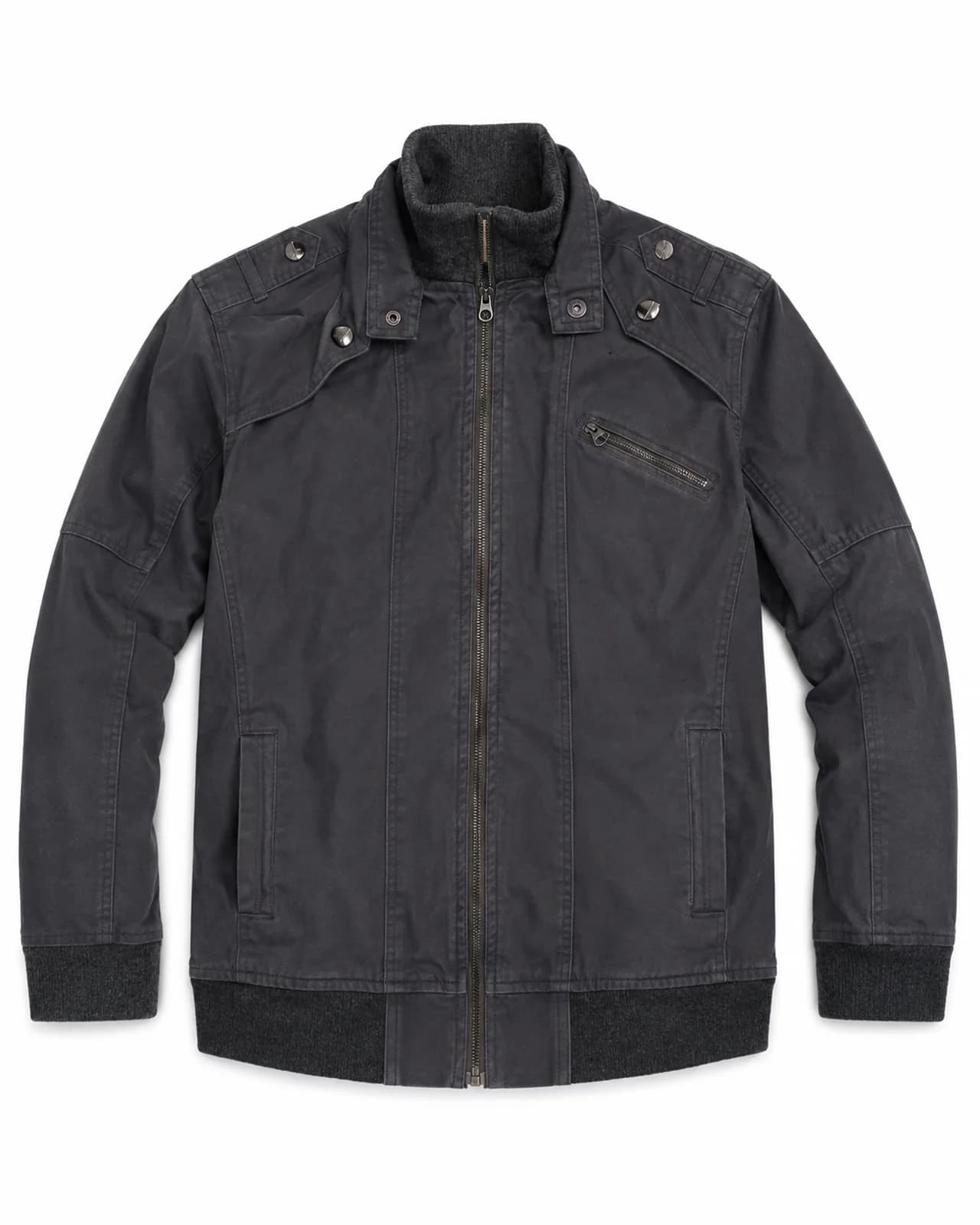
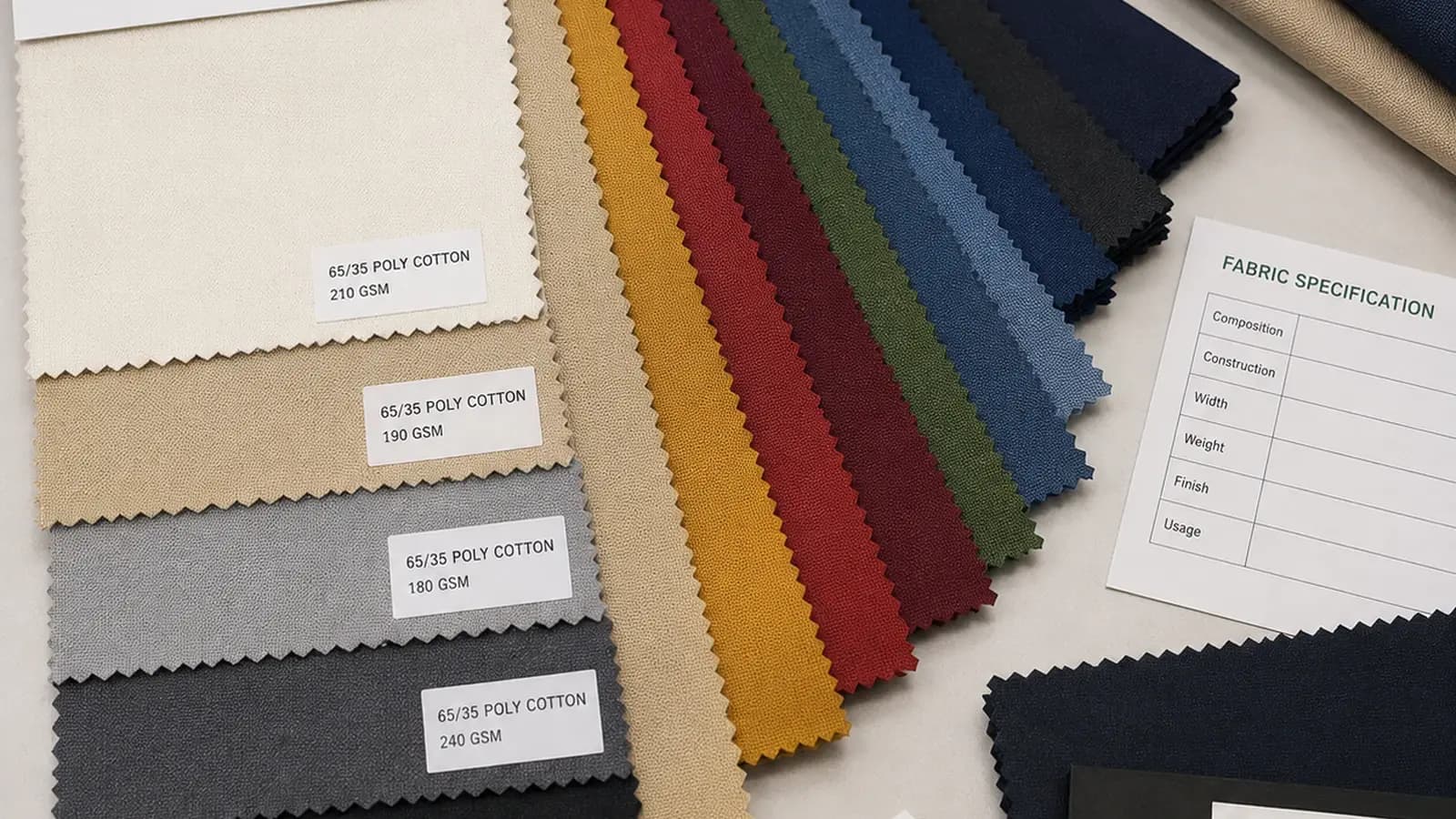
Construction families used in uniform and workwear programs, with typical weights, hand feel, finish routes and applications. Given for orientation while you scope a program, not as a stock list.
Fabric constructions
Construction
Weight
Stretch
8 of 8 constructions
Weights and compositions shown are typical ranges for each construction, given for orientation while you scope a program. They are not a stock list and not an offer. Final material, weight, finish and performance are confirmed against your specification and approved testing.
*Recycled content is only supplied against mill documentation. We do not claim a sustainability certification without the certificate to support it.
Fabric weight
A specification written in ounces per square yard and a mill quoting grams per square metre are describing the same fabric. Convert between them, work out the weight of a swatch you have cut, or size the fabric for an order.
oz/yd² to gsm, and back
Result
203gsm
6.00oz/yd²
Published at this weight · 2 of 8
- Cotton PiqueKnit · 180-220 gsm
- Poly-Cotton TwillWoven · 195-280 gsm
Typically used for
- Uniform polos
- Retail and grocery programs
- Corporate wear
- Aprons
- Work shirts
- Work trousers
- Chef wear
This works out fabric weight, not fabric consumption. How many metres a garment takes comes from the marker — the pattern, the size ratio, the width and the nap all move it — and that is produced at sampling rather than estimated from a weight. Send the specification and we will come back on construction and commercial FOB costing.
Every construction on this page, by weight
Marker at 203 gsm
Drag, or use the arrow keys, to see what else is made at a weight.
Woven Shirting115-180 gsm
Performance Polyester130-190 gsm
Single Jersey140-200 gsm
Cotton Pique180-220 gsm
Poly-Cotton Twill195-280 gsm
Cotton Canvas240-340 gsm
Brushed Fleece260-380 gsm
Bonded Softshell260-340 gsm
Ranges are the constructions published above, not a stock list. A weight outside all of them is a development question rather than a refusal.
Dimensional change
Shrinkage is measured separately in each direction. Enter the dimensions before and after the wash you care about — the percentage for each axis is exact arithmetic, not a factory tolerance.
Measure before and after the wash or finish you care about. Units cancel — use centimetres, inches or marked intervals, but the same unit on both sides.
Result
Enter an after-wash measurement for length, width, or both. The percentage for each direction appears here.
This is arithmetic on your measurements, not an approval band. Agree the wash method and residual tolerance in writing before sampling. Weight (GSM) is a separate question — cloth that shrinks in area can also gain gsm.
Specification
Two fabrics can share a GSM and behave nothing alike. Pick a factor — construction, stretch, finish — and read every published cloth through it.
GSM tells you how heavy a fabric is. It does not tell you how it feels, drapes or lasts.
Five things decide how a cloth behaves. A specification that names only weight leaves four of them to whoever is making it, which is how two mills both hit 220 gsm and ship fabrics that wear differently.
Fibre
Cotton, polyester, lyocell and their blends absorb moisture, hold heat and recover from creasing differently. Two fabrics of one weight in different fibres are not substitutes for each other.
Put in the tech pack. Composition by percentage, not just the family name.
Fibre across every construction on this page
Viewing · Fibre
- Cotton Pique180-220 gsm
- 100% Cotton · 65/35 Poly-Cotton · 60/40 CVC
- Single Jersey140-200 gsm
- 100% Cotton · CVC · Tri-blend
- Poly-Cotton Twill195-280 gsm
- 65/35 Polyester-Cotton · 80/20 Polyester-Cotton · Cotton-rich twill
- Woven Shirting115-180 gsm
- Poly-cotton poplin · Oxford · Cotton-rich broadcloth
- Brushed Fleece260-380 gsm
- 100% Polyester · 65/35 Poly-Cotton · CVC French terry
- Performance Polyester130-190 gsm
- 100% Polyester · Polyester-Elastane · Recycled polyester*
- Bonded Softshell260-340 gsm
- Polyester face with fleece backing · Polyester-Elastane bonded
- Cotton Canvas240-340 gsm
- 100% Cotton · Poly-cotton canvas · Cotton duck
Every row above is the same weight class it was before. Switch the factor and the fabrics reorder — which is the point: the number they share is the one that separates them least.
Weights and compositions shown are typical ranges for each construction, given for orientation while you scope a program. They are not a stock list and not an offer. Final material, weight, finish and performance are confirmed against your specification and approved testing.
Compare
A buyer rarely chooses a fabric in the abstract — it is pique against jersey, or twill against canvas. Drag the seam; the table under the photographs is the half of the comparison a sourcing manager quotes from.


- Comparing
- Cotton Pique
- Single Jersey
- Construction
- Weft-knit pique, interlocked texture
- Plain weft knit, flat face
- Typical weight
- 180-220 gsm
- 140-200 gsm
- Weight class
- Mid
- Light
- Stretch
- None
- Mechanical
- Hand feel
- Textured, dry, structured. Holds shape through the wash cycle
- Smooth, soft, fluid. The standard T-shirt hand
Where they diverge
5 of 5 fields differ
- Construction. Cotton Pique: Weft-knit pique, interlocked texture. Single Jersey: Plain weft knit, flat face.
- Typical weight. Cotton Pique: 180-220 gsm. Single Jersey: 140-200 gsm.
- Weight class. Cotton Pique: Mid. Single Jersey: Light.
- Stretch. Cotton Pique: None. Single Jersey: Mechanical.
- Hand feel. Cotton Pique: Textured, dry, structured. Holds shape through the wash cycle. Single Jersey: Smooth, soft, fluid. The standard T-shirt hand.
Weights and compositions shown are typical ranges for each construction, given for orientation while you scope a program. They are not a stock list and not an offer. Final material, weight, finish and performance are confirmed against your specification and approved testing.
Trims
The components, and the decisions they carry.
Trims are where sampling most often stalls, because a decision was left open. This is the list of decisions, so you can arrive with the answers.
| Component | Material | What you specify | Applications |
|---|---|---|---|
| Buttons | |||
| Shank Button | Metal, polyester or urea | Ligne size, finish, shank type and attachment method | Denim, Outerwear, Work trousers |
| Sew-Through Button | Polyester, urea or corozo | Ligne size, hole count, colour match and stitch pattern | Woven shirts, Chef coats, Uniform tops |
| Snaps | |||
| Press Stud On children's garments the pull-test standard is set by the destination market and is qualified before development. | Brass or stainless, nickel-free options | Cap size, finish, spring type and pull-test requirement | Work shirts, Outerwear, Kidswear |
| Zippers | |||
| Coil Zipper | Polyester coil on woven tape | Gauge, length, slider and puller, open-end or closed-end | Fleece, Outerwear, Bottoms |
| Moulded Tooth Zipper | Injection-moulded polyacetal | Gauge, colour, slider style, zip garage and wind flap | Softshell, Outerwear |
| Water-Resistant ZipperDevelopment available Water resistance is a tested property. It is confirmed against buyer-approved testing, not asserted from the component alone. | Coil or moulded with a laminated tape | Whether the requirement is water-resistant or waterproof — they are different tests | Softshell, Outerwear |
| Elastic | |||
| Woven Elastic | Polyester or nylon with rubber or spandex core | Width, stretch ratio, recovery and application method | Joggers, Work trousers, Kidswear |
| Drawcord | |||
| Flat Drawcord Drawcords on children's garments are restricted by destination-market safety rules and are qualified before development. | Cotton, poly or blended braid | Width, length, tipping type and eyelet or buttonhole exit | Hoodies, Joggers, Shorts |
| Labels | |||
| Woven Main Label | Damask or taffeta woven | Artwork, fold type, placement and whether it is sewn into the neck or side seam | All categories |
| Care & Content Label Content and care wording is a legal requirement that varies by destination market. It is confirmed against the buyer's market before printing. | Satin or printed polyester | Required wording, language set and symbol standard for the destination market | All categories |
| Heat-Transfer Neck Label | Printed transfer film | Artwork, size, placement and whether a sewn label is being replaced | Tees, Athleisure, Polos |
| Velcro | |||
| Hook & Loop Tape | Nylon or polyester hook and loop | Width, closure strength, sew-on or adhesive backing | Workwear, Outerwear, Aprons |
| Reflective | |||
| Reflective TapeTechnical qualification required Hi-vis is a certified product class. The garment is built to the buyer's nominated standard, and that standard is qualified with documentary evidence before AHM quotes it. | Retroreflective film or yarn on a carrier tape | The nominated standard, tape width and placement configuration | Hi-vis, Industrial workwear |
| Thread | |||
| Core-Spun Thread | Polyester core with cotton or poly wrap | Ticket number, colour match and stitch density per seam type | All categories |
| Rib | |||
| Rib Trim | 1x1 or 2x2 knitted rib, optional elastane | Width, depth, recovery and whether it is tubular or cut-and-sewn | Fleece, Outerwear, Polos |
| Tapes | |||
| Twill Tape | Cotton or poly twill | Width, colour and whether it is used for seam reinforcement or as a design detail | Woven shirts, Outerwear, Aprons |
Trims are specified or nominated during development. This library lists the decisions a program has to make, not stock held. Component sourcing is confirmed against your specification and, where you nominate a supplier, against theirs.
Fabric questions
Not sure which construction fits? Tell us the requirement and we will recommend options against it.
GSM is grams per square metre. The fabric's weight, not its quality or durability. A heavier fabric is not automatically better: it costs more, ships heavier and can be less comfortable. What matters is whether the weight suits the wear pattern and the laundering method.
The polyester carries strength, shrinkage control and colour retention through repeated industrial washing; the cotton carries comfort and breathability. The 65/35 ratio is the point where most uniform programs get acceptable comfort without giving up wash durability, which is why it is the default in aprons and work shirting.
Usually. Send a swatch or the specification and we will match composition, weight, construction and finish as closely as the market allows. Where an exact match is not achievable, we say so and present the nearest alternatives rather than substituting silently.
Recycled content is supplied only against mill documentation, and we do not describe a fabric as certified without the certificate to evidence it. If your program requires a specific certification, nominate it and we will confirm what can be documented.
Describe the requirement. How the garment is worn, how it is washed, what it has to survive, and we will present options with the commercial consequence of each attached.
Explore next
Explore next
Fabric shrinkage guide
Length vs width, test methods and residual tolerance.
Polyester dyeing for buyers
Lab dips, heat and lot-to-lot shade on polyester programs.
Knit constructions explained
Jersey, pique, rib and fleece for uniform buyers.
Fabric sourcing process
Lab dips, shade control and incoming inspection.
Product range
Twelve apparel families manufactured to specification.
Uniform program industries
How fabric requirements change by sector.
How Garment FOB Costing Works
A garment FOB price is built from fabric and trims, cutting and assembly labour, decoration, finishing and inspection, packing materials, export handling, and the manufacturer's overhead and margin.
65/35 Poly-Cotton for Workwear
65/35 poly-cotton means 65% polyester and 35% cotton.
Pique vs Jersey for Polo Shirts
Pique is a textured knit with a raised waffle structure that holds shape, hides light soiling and resists showing creases, which is why most uniform polos use it.
Fabric GSM Guide for Apparel Buyers
GSM means grams per square metre.
Embroidery vs Screen Printing
Embroidery is priced by stitch count and is largely indifferent to the number of colours; screen printing is priced by colour count and is largely indifferent to design size.