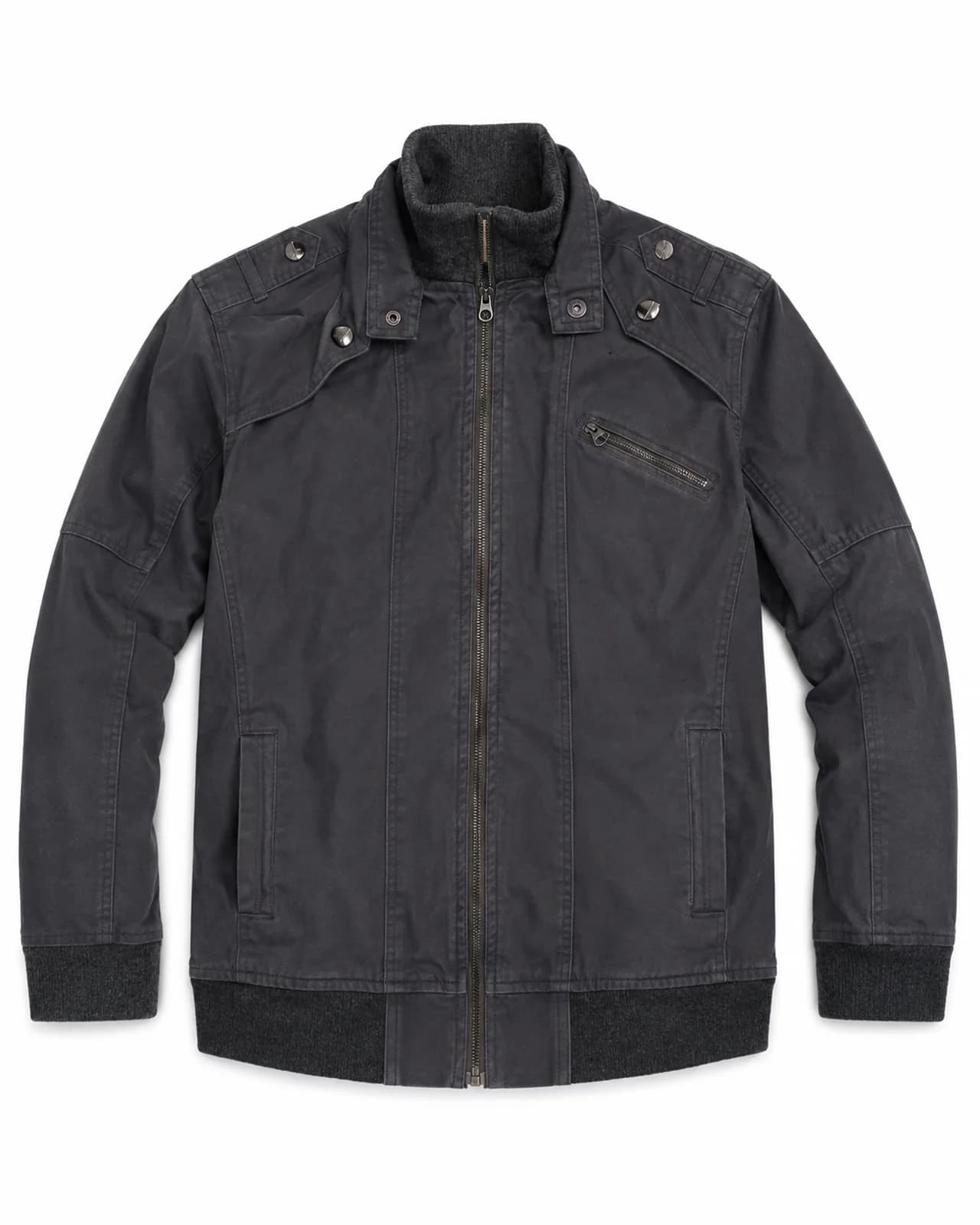
Quality assurance
Quality control that only happens at the end can reject a shipment but cannot save one. Inspection runs across every point where a problem is still correctable.
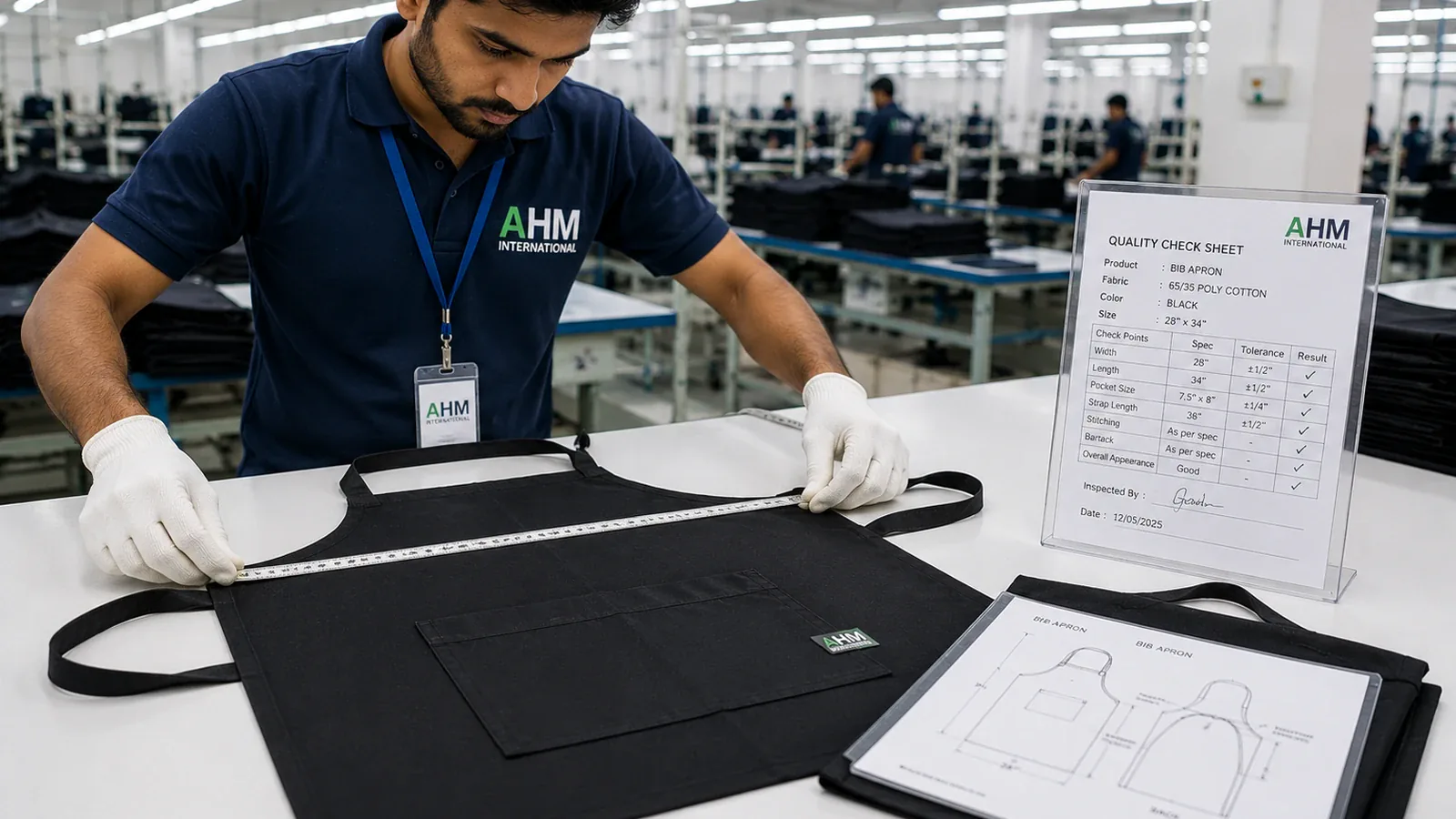
Quality assurance
An inspection that only happens at the end can reject a shipment. It cannot save one.
- 01
Incoming Material
Fabric and trims are checked against the approved standard for shade, weight, width and visible defects before anything is cut.
- 02
Pre-Production
A pre-production sample confirms bulk fabric, trims and construction against the sealed sample before the line starts.
- 03
Inline Inspection
Checks run at defined operations during assembly, so a construction problem is found while the batch can still be corrected.
- 04
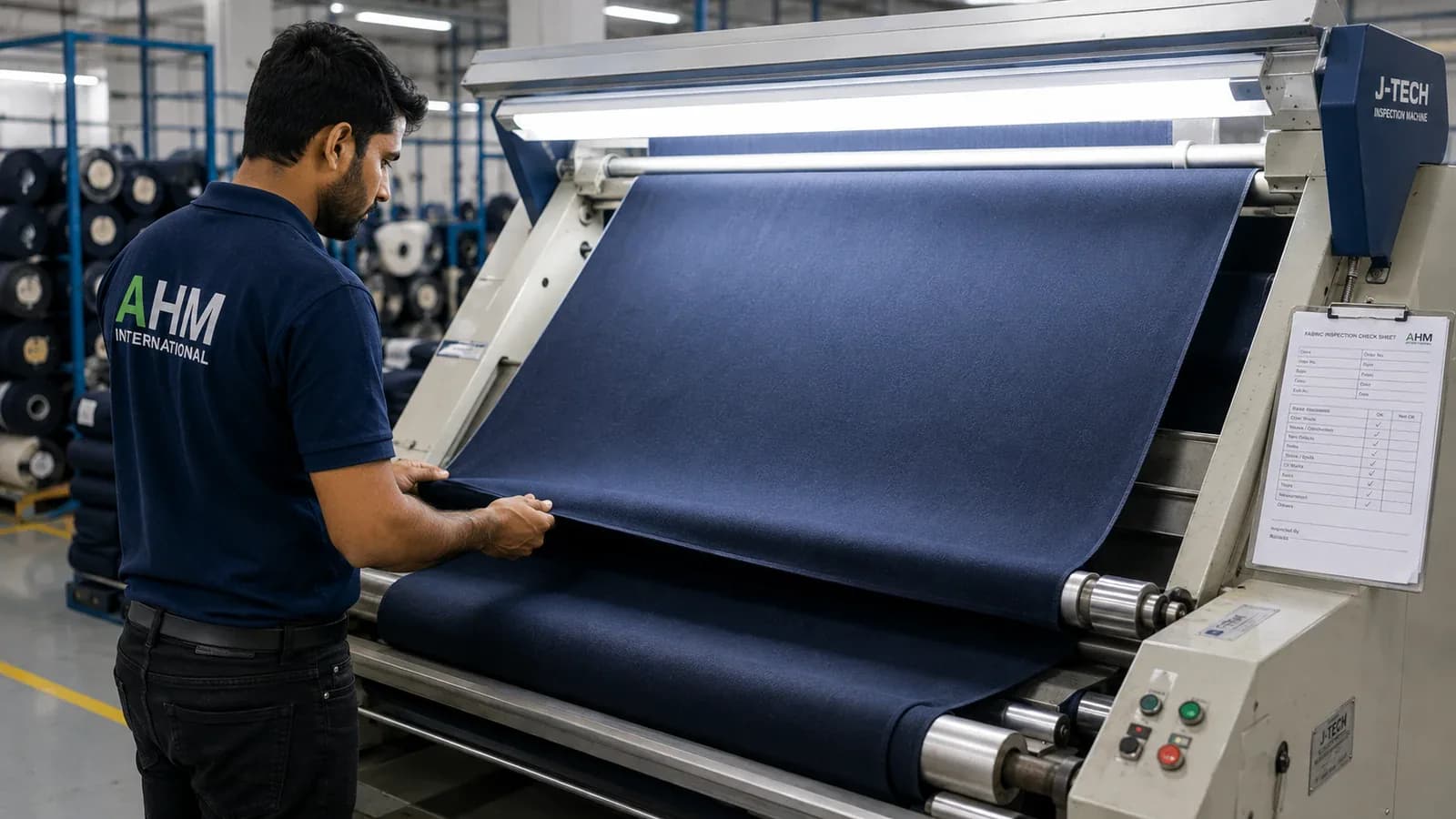
Measurement
Garments are measured against the approved size specification and tolerance, by size, across the run.
- 05
Finishing Inspection
Appearance, decoration, labelling, trimming and pressing are checked against the approved sample.
- 06
Packing Verification
Assortment, ratio, polybag, carton contents and carton marking are verified against the packing instruction.
- 07
Final Release
The shipment is released against the agreed inspection standard and the documentation required for export.
What is checked
Fabric
Shade, weight, width, hand feel and visible defects against the approved standard.
Construction
Seam type, stitch density, thread, needle and reinforcement against the specification.
Measurement
Every measurement point against the approved size specification and tolerance.
Appearance
Finish, pressing, trimming and overall presentation against the sealed sample.
Decoration
Placement, colour, size and durability against the approved strike-off or sew-out.
Packaging
Labelling, folding, polybag, ratio, carton contents and carton marking.
Documentation
Packing list, carton dimensions and weights, and the commercial documents required for export.
Inspection standard
Inspection standards are aligned to approved buyer requirements. Where your program specifies an inspection level, a third-party inspector or a defect classification, we work to it and confirm it in writing before production.
Standards
Inspection standards are aligned to approved buyer requirements. Where your program specifies an inspection level, a third-party inspector or a defect classification, we work to it and confirm it in writing before production.
We publish no AQL level, audit score or certification on this site. Not because there is nothing to say, but because a claim without a document behind it is worth less than silence to a buyer who checks.
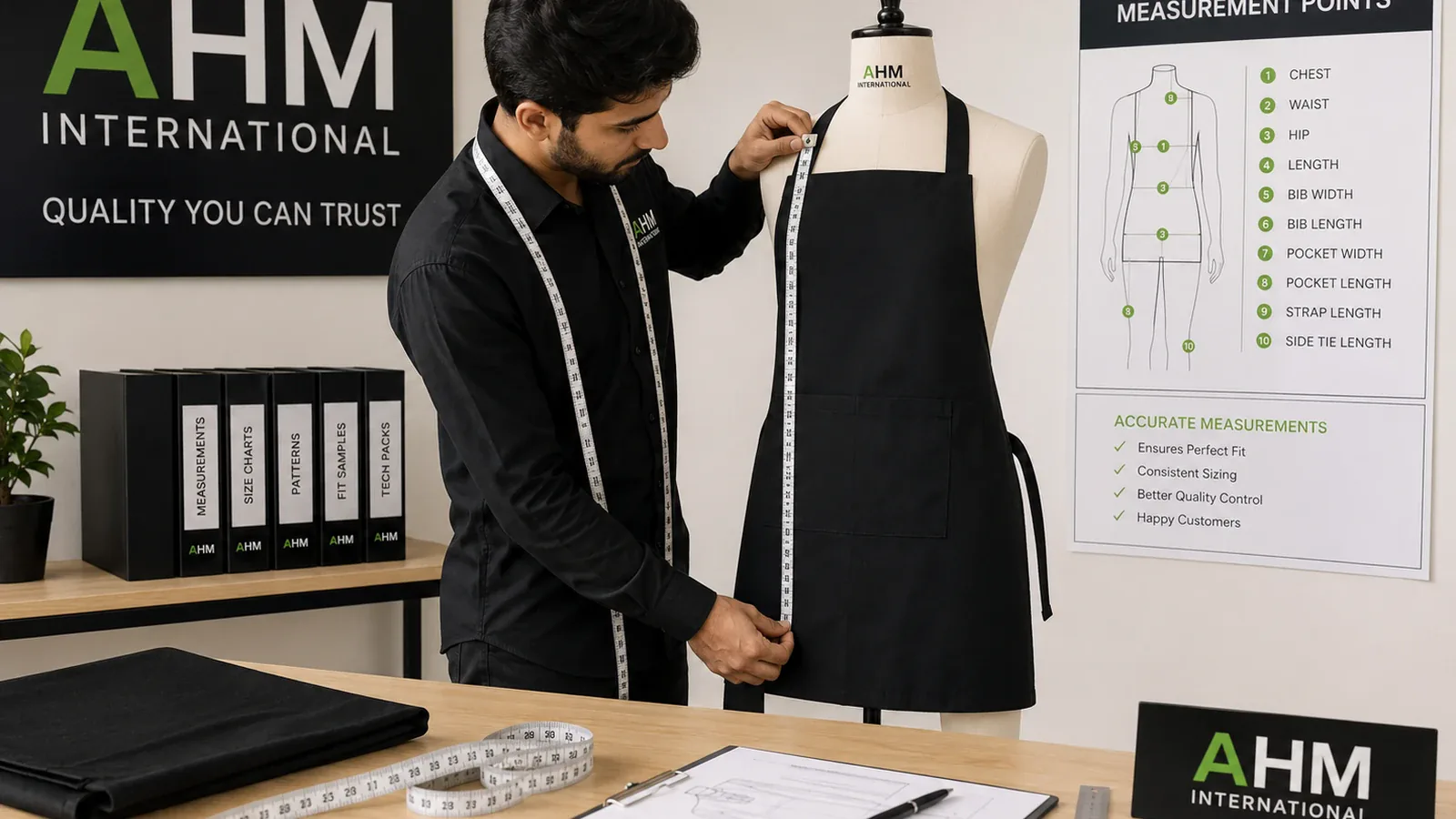
Quality gates
Nine gates, and what each one stops.
A list of checks tells you what is looked at. What matters to a buyer is what happens when one of them fails, so every gate states its own stop condition.
- 01
Material Inspection
Fabric faults are cheapest to find before they are cut. A defect discovered in a finished garment has already absorbed every operation after cutting.
- Construction and weight against spec
- Shade against the approved lab dip
- Width and usable yield
- Visual defects across the roll
Record producedIncoming material inspection record
If it failsThe lot is held and not issued to cutting. Replacement or a buyer-approved deviation is agreed before the roll moves.
- 02
Pre-Production Approval
The PP sample proves the bulk materials and the actual line — not just that the pattern works in a sample room.
- Made on bulk fabric and trims
- Made on the production line
- Measured against the approved specification
- Decoration to the approved strike-off or sew-out
Record producedApproved PP sample, retained as the production reference
If it failsCutting does not start. This is the last gate where a change is inexpensive.
- 03
Cutting Check
A cutting error repeats across every panel in the lay, so it is verified once rather than discovered a thousand times.
- Marker against the approved pattern
- Ply count and lay tension
- Shade banding maintained through the bundle
- Notch and drill placement
Record producedCutting inspection record with bundle references
If it failsThe lay is stopped and re-cut. Affected bundles are quarantined rather than allowed forward for repair.
- 04
Sewing / Construction
Confirms the garment is being built to the approved construction, not to whatever is fastest on the day.
- Seam type against specification
- Stitch density per seam
- Bar-tack placement at stress points
- Thread and needle size for the fabric
Record producedConstruction verification against the sealed sample
If it failsThe operation is corrected at source and preceding output is re-checked before the line continues.
- 05
Inline QC
Catches a fault at the operation that caused it. Final inspection can only reject; inline can still correct.
- Sampling at each major operation
- Recurring defect patterns by operator and machine
- In-process measurement spot checks
Record producedInline inspection records through the run
If it failsThe operation is stopped and reset. A repeating defect is raised as a CAPA rather than absorbed.
- 06
Measurement
Confirms the bulk sits inside the agreed tolerance — and reports where inside it, because a consistent bias to one edge is a process problem even though nothing has failed.
- All specified points of measure
- Across the size range, not only the base size
- Against tolerance, both directions
Record producedMeasurement inspection record against specification
If it failsOut-of-tolerance lots are held. A within-tolerance bias is reported rather than quietly accepted.
- 07
Finishing
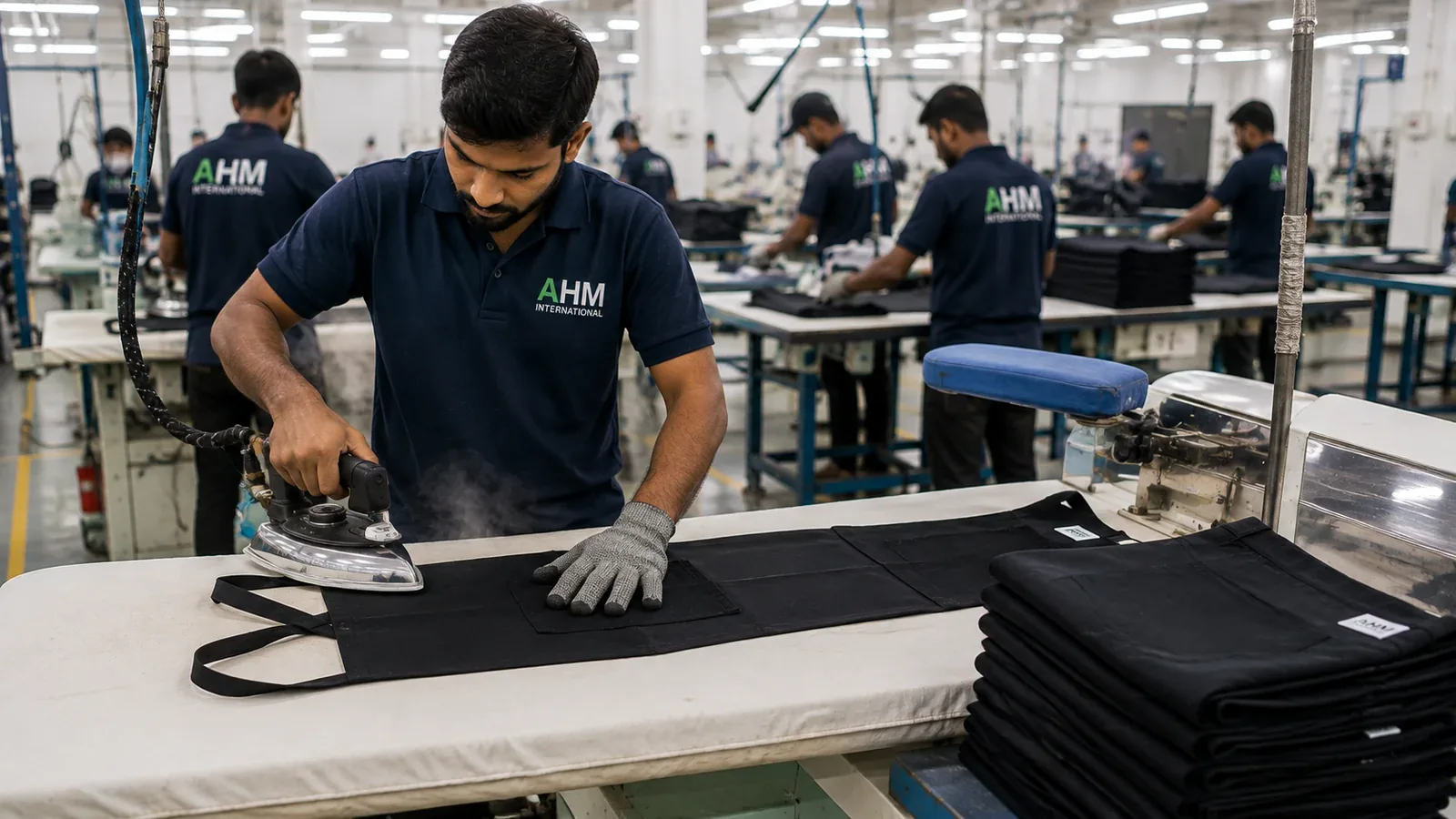
The last point at which the garment's appearance can be corrected before it is packed.
- Trimming and thread ends
- Pressing and appearance
- Labelling: main, care, size, country of origin
- Decoration placement and finish
Record producedFinishing inspection record
If it failsGarments return for rework and are re-inspected rather than passed on a second look.
- 08
Packing
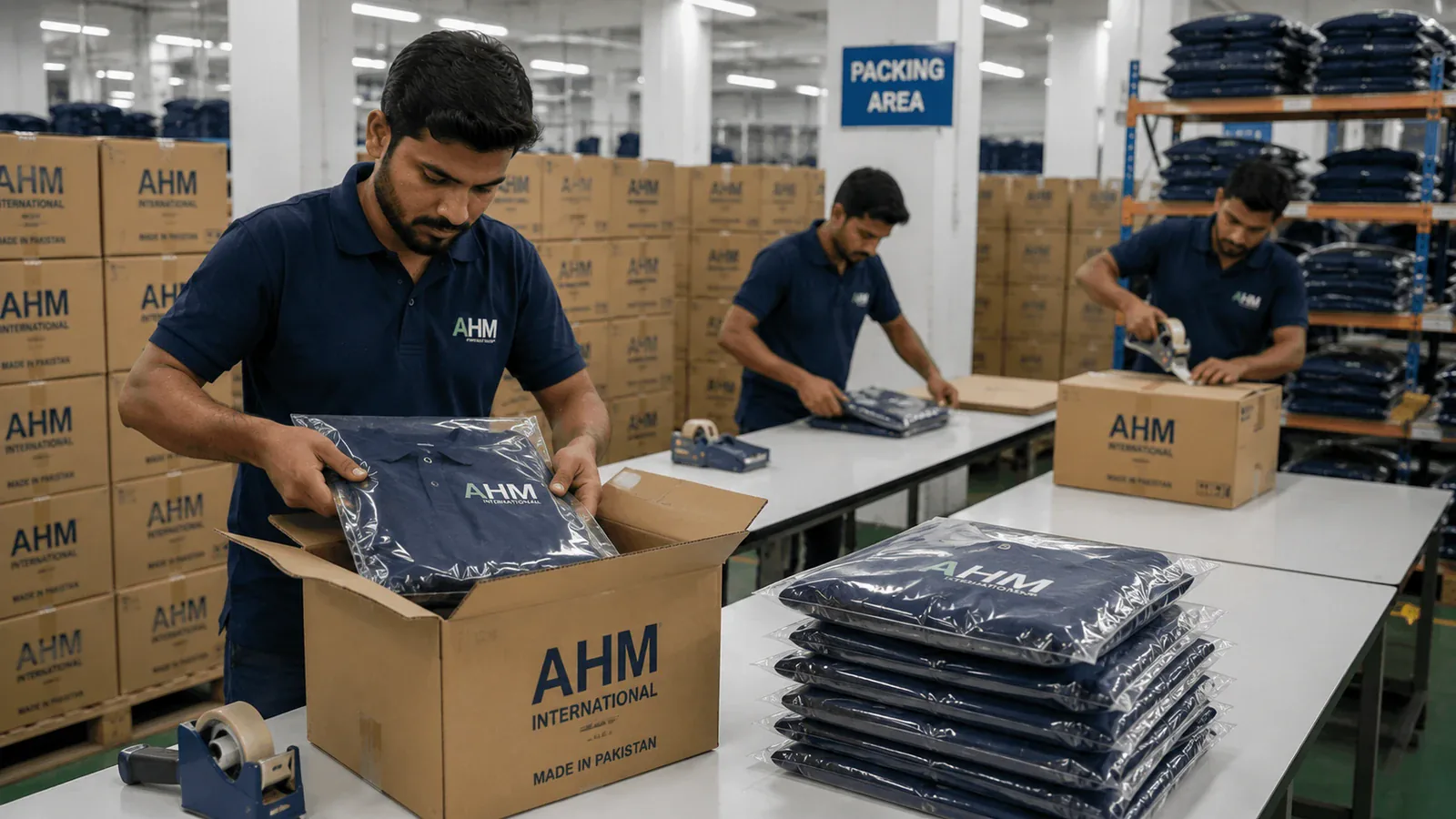
Correct garments packed wrongly arrive as a claim. Ratio, marking and carton content are verified against the instruction.
- Fold or hang to instruction
- Polybag and barcode
- Ratio or solid pack against the packing list
- Carton marking against approved artwork
Record producedPacking verification record and packing list
If it failsCartons are opened and repacked. The packing instruction is re-confirmed with the buyer where it was ambiguous.
- 09
Final Release
The decision to ship, taken against the sealed sample and the acceptance standard the buyer set — not against whether the shipment date is close.
- Final inspection against the sealed sample
- Against the buyer's nominated acceptance standard
- Documentation complete
- Third-party inspection where the buyer nominates one
Record producedFinal inspection report
If it failsThe lot is not released. A shipment date is not a reason to release a failing lot.
This describes how AHM runs quality on a program. It is a statement of process, not a certification claim, and no audit rating or inspection outcome is published on this site. Acceptance levels are a commercial decision confirmed with you before production.
Buyer questions
Yours. Where your program specifies an inspection level, a defect classification or a third-party inspector, we work to it and confirm it in writing before production. We do not publish an inspection level as a general claim, because the only meaningful answer is the standard agreed for your order.
Yes, and it is routine. The inspection standard is confirmed before production specifically so there is no disagreement about the criteria on the day of inspection.
It depends where the failure was found. Inline checks exist so that a construction fault is caught while the batch can still be corrected. A failure found at final inspection is reworked or replaced, and the cause is traced back to the stage that let it through.
Against the approved size specification and its tolerance, by size, across the run rather than once at the start. Tolerances are agreed at development. A measurement chart without tolerance cannot be inspected against.
Certification and audit status is confirmed in writing during commercial discussion. We do not display accreditations or audit scores on this site, because we publish only what we can evidence with a document.
Tell us the level, the defect classification and whether a third-party inspector is involved. We confirm it in writing before production starts.
Explore next
Explore next
Quality control process
Stage-by-stage detail and what usually goes wrong.
Manufacturing process
Nine stages from development to FOB handover.
Export packing
Assortment, ratio, marking and verification before sealing.
The Apparel Sampling Process Explained
An apparel program normally runs through four sample types.
Carton Marking for Apparel Orders
An apparel export carton normally carries shipping marks on one face and side marks on an adjacent face: buyer name or code, purchase order reference, style, colour, size or ratio, carton number in sequence, quantity, and gross and net weight.
Fabric Shrinkage Guide for Apparel Buyers
Fabric shrinkage is the change in length or width after washing, drying, steaming or finishing, expressed as a percentage of the original dimension.