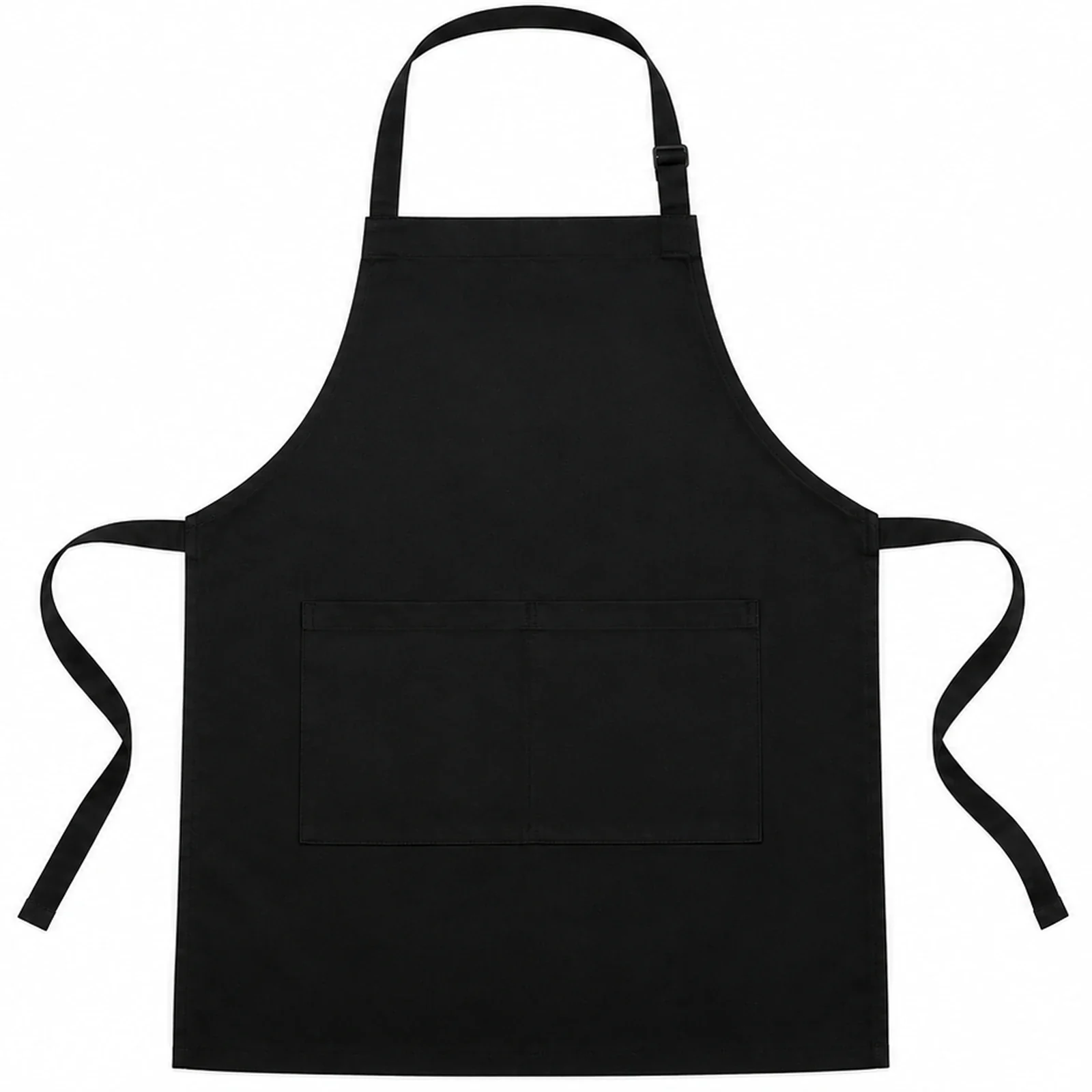
Three-Pocket Bib Apron
Divided patch pocket, bar-tacked stress points, adjustable neck
Representative article
Products: 04
The article AHM has documented export experience producing: a stain-managed poly-cotton bib apron for a United States uniform program.
Product types
Divided patch pocket, bar-tacked stress points, adjustable neck
Representative article
Divided pocket, extended waist ties
Representative article
Ventilated crown, elasticated or tie back
Representative article
Specification
These are the fields resolved during development. Where a value depends on your program, we say so rather than publishing a number that would not survive contact with your specification.
Weights shown are typical ranges for this product class, given for orientation only. Final composition, weight, construction and finish are confirmed against your specification during development.
Approved as a strike-off or sew-out on the bulk fabric before production, not after.

Development
The first five stages decide most of the cost. After approval, production is execution against a document you have already signed.
We review the specification, reference garment or sketch and come back with the questions that would otherwise surface as a failed first sample.
Materials are matched to the requirement and presented with the commercial consequence of each option attached.
FOB costing is built against the confirmed construction, materials, decoration, packing and quantity.
Proto and fit samples are produced against the specification, with a written comment sheet at every round.
Fit, measurements, colour and decoration are approved and locked as the reference for bulk.
Applications
Buyer questions
Poly-cotton twill is the common choice. Most often a 65/35 blend, which balances durability, shrinkage control and the ability to take a stain-release finish. Cotton canvas suits heavier utility aprons where abrasion matters more than laundering.
It is a chemical finish applied to the fabric that reduces how readily soil bonds to the fibre, so more of it lifts during washing. It is a fabric property, not a construction one, and its durability across wash cycles should be confirmed by testing before it is relied on in a program.
Yes. Send a current apron and we will measure it, identify the construction, pocket configuration and hardware, and propose a fabric match. This is the fastest route to a comparable quotation.
Bar tacks at the pocket mouth and at strap attachment points, which are where failures start. Pocket bags and strap webbing carry the load, so specification there matters more than overall fabric weight.
Yes: self-fabric ties, webbing with a slider, buckles, D-rings or press studs. Adjustable neck hardware is common where one apron has to fit a wide range of wearers, and it is specified at development along with the hardware reference.
One style is enough to see how we work. Send a tech pack, a reference garment or a written requirement and we will come back on construction, materials and FOB costing.
Explore next
Uniform & Workwear manufacturing
Garments that have to survive a shift, a wash cycle and a reorder twelve months later looking like the first delivery.
Polos & T-Shirts manufacturing
The highest-volume item in most uniform programs, and the one where collar recovery and colour consistency across reorders decide whether a buyer stays.
Fleece & Sweatshirts manufacturing
Sweatshirts, hoodies and full-zip fleece: the layer that gets worn outside the building, which makes it the most visible garment in the program.
Materials and fabric selection
Construction families, typical program weights, finishes and where each is used.
Quality assurance process
Where inspection happens and what is checked at each stage.
FOB export from Port Qasim
Documentation, packing, carton marking and handover.