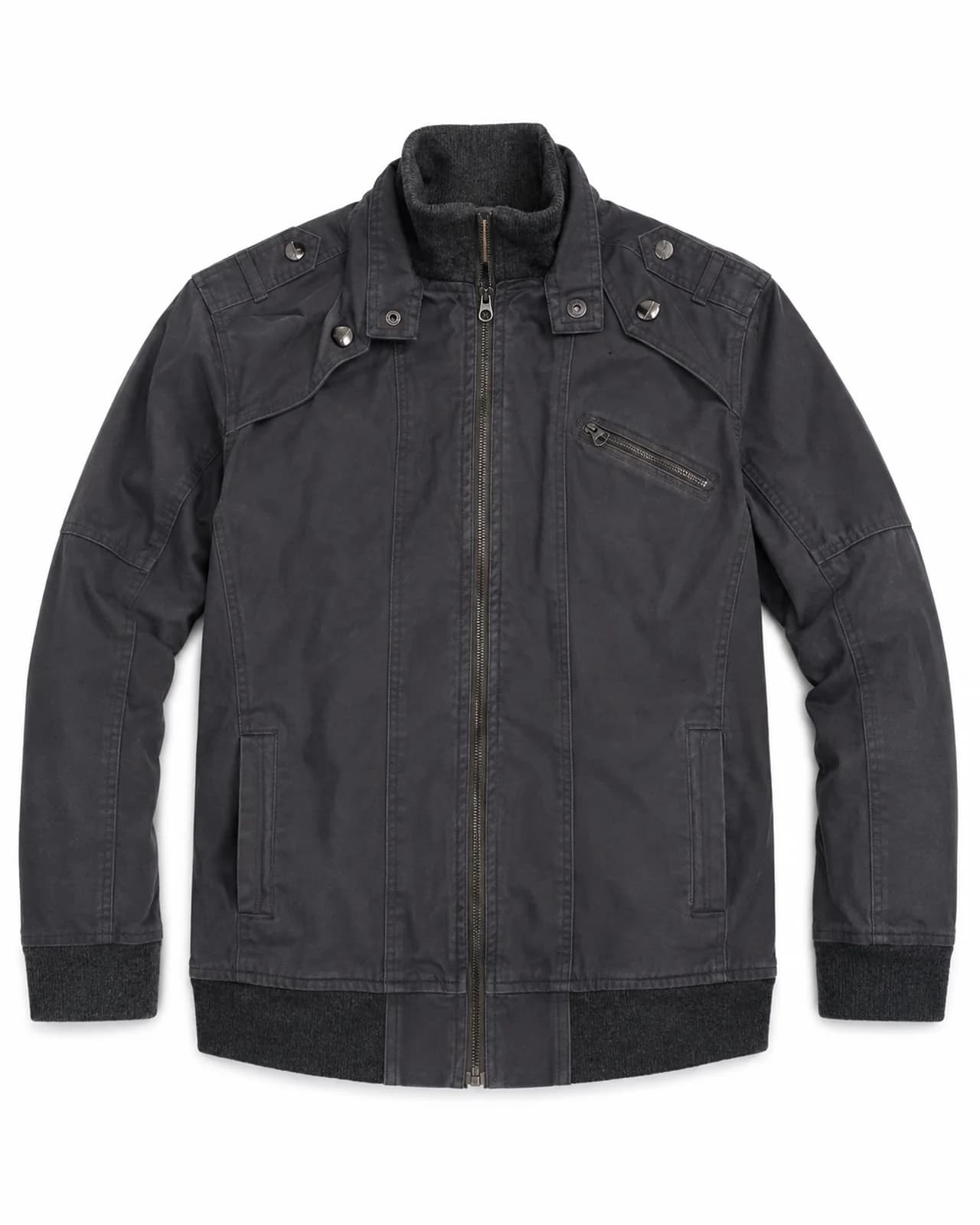
Fabric guide
A woven fabric is defined by how its threads cross. What plain weave, twill, satin, canvas and ripstop each do, why it matters for aprons and workwear, and why weave is a separate question from weight.
 AI render
In short
A weave is the pattern in which lengthwise threads (the warp) and crosswise threads (the weft) interlace. Plain weave goes over one, under one, and is firm and flat. Twill shows a diagonal rib and drapes and wears well. Satin floats threads for a smooth face. Canvas is a heavy plain weave. The weave sets strength, drape, wrinkling and how well the cloth takes a print, and it is independent of GSM.
7 min read
Written by the AHM International product development team
Updated October 2026. Every worked figure is checked by automated tests.
What a weave is
Woven fabric is made on a loom from two sets of yarn at right angles. The lengthwise yarns are the warp; the crosswise yarns, laid in one at a time, are the weft or filling. The weave is the rule for which warp yarns lie over and which under each weft yarn.
That rule changes how the cloth behaves. A tight, frequent interlacing gives a firm, flat fabric that holds its shape; longer floats, where a yarn passes over several others, give a smoother, more fluid fabric that is also easier to snag. Knitted fabrics are different in kind: they are loops, not interlaced threads, and stretch and recover in ways a woven cannot without elastane.
The common weaves
Descriptions are of the weave in general. A particular fabric also depends on fibre, yarn and finishing.
| Weave | How it is built | What it tends to do | Often found in |
|---|---|---|---|
| Plain | Each weft goes over one warp and under the next, alternating | Firm, flat, balanced; wrinkles more readily; takes a print well | Poplin shirting, light canvas, lining |
| Twill | Each weft passes over two or more warps, shifting one step per row to give a diagonal line | Drapes better than plain at the same weight, hides soil and wears well; a little more dense | Work trousers, chino, drill, denim, aprons |
| Satin and sateen | Long floats, so the surface is mostly one set of yarns | Smooth, lustrous, drapey; less abrasion resistance and prone to snagging | Dress fabrics, sateen sheeting, linings |
| Basket and oxford | Two or more yarns act together in each direction | Textured, open feel; softer and more breathable than a plain weave of equal weight | Oxford shirting |
| Canvas | A heavy plain weave, often from thicker or plied yarns | Stiff, hard-wearing, resistant to abrasion | Heavy aprons, bags, workwear |
| Ripstop | A plain weave with thicker reinforcing yarns at regular intervals | A small tear is stopped at the next reinforcing yarn | Lightweight technical and outdoor fabrics |
| Herringbone | A twill that reverses direction in stripes | The look of twill with a zigzag pattern | Suiting, some workwear |
Why the weave matters to a buyer
- Wear
- Closely interlaced weaves with fewer floats resist abrasion and snagging better. A satin face is the weakest point of an otherwise strong cloth.
- Soil and print
- A twill's diagonal texture hides marks, which is part of why it is used for aprons and uniforms. A smooth plain weave gives the cleanest surface for printing.
- Drape and comfort
- At the same weight, twill drapes and moves more freely than plain weave. Heavy canvas is deliberately stiff, and softens with washing.
- Creasing
- Plain weaves crease more easily than twills, which matters for shirting that should look pressed after a wash.
- Cost
- Weave complexity and yarn count change loom speed and cost. A fabric is rarely chosen on weave alone.
Weave, weight and density are three questions
Two fabrics can share a weave and still be very different, so a specification needs more than the name of the weave.
- Weight (GSM)
- How heavy the fabric is per area. Two plain weaves can differ by a factor of two.
- Density
- Warp ends and weft picks per inch or centimetre. A dense fabric of fine yarns can weigh the same as a sparse one of coarse yarns and feel completely different.
- Yarn
- Fibre, count and whether it is spun or filament, single or plied. Yarn decides how the weave feels.
How to specify a woven fabric
Give the weave, the fibre composition, the weight with its unit and tolerance, and the width, then confirm against a swatch. "Poly-cotton twill, 65/35, 240 gsm ±5%, 150 cm" is a specification; "heavy twill" is a description. A mill can match a swatch more reliably than it can match adjectives.
Work the numbers
Try it on your own fabric.
Related questions
Twill is a woven fabric where the weft passes over two or more warp threads and shifts one thread each row, which makes a diagonal rib. Denim, chino and drill are all twills.
Often more wear-resistant and better draping at the same weight, but not automatically stronger: fibre, yarn and density matter as much as the weave.
Canvas is a heavy plain weave; twill is a diagonal weave that can be any weight. A heavy fabric can be either, so the weave should be named in a specification.
Rarely. Satin's long floats snag and abrade, so it suits smooth, light-wear fabrics more than uniforms or aprons.
Send one specification and we will apply exactly this thinking to your style. Construction, materials and commercial FOB costing.
Explore next