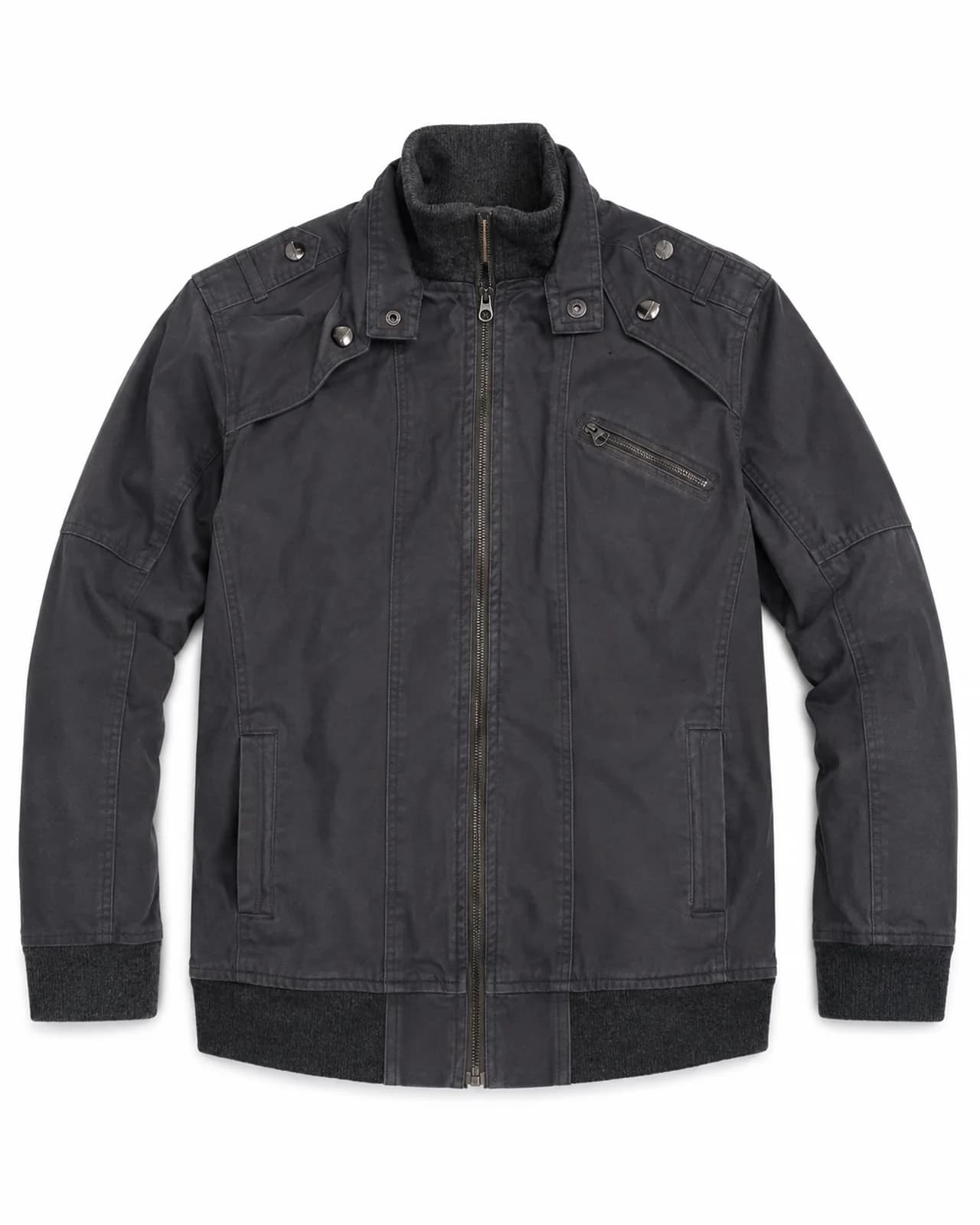
Fabric guide
The properties of the fibres garments are made from, how blends trade one against another, and the questions that stop a composition from being only a label.
 AI render
In short
Fibres are the raw material; yarns are fibres spun or extruded into thread; fabric is yarn knitted or woven. Cotton absorbs and breathes but shrinks and creases. Polyester is strong, quick-drying and shape-holding but absorbs little. Nylon is the most abrasion-resistant of the common fibres. Viscose drapes well but is weak when wet. Blends trade one set of properties for another.
8 min read
Written by the AHM International product development team
Updated October 2026. Every worked figure is checked by automated tests.
Fibre, yarn, fabric
A fibre is the raw material: a cotton boll's fibre, a wool staple, a polyester filament. Yarn is fibre spun, or filament extruded, into a continuous thread. Fabric is yarn made into cloth by weaving, knitting or bonding. A property at one stage is changed by the next: the same fibre behaves differently in a fine knit and a heavy twill.
Fibres are grouped by origin. Natural fibres come from plants (cotton, linen) or animals (wool, silk). Synthetic fibres are made from petrochemicals (polyester, nylon, elastane). Regenerated fibres (viscose, modal, lyocell) are made by dissolving natural cellulose, usually from wood pulp, and spinning it again.
The common fibres
General tendencies of each fibre. Yarn, construction and finish can move every one of them.
| Fibre | Strengths | Limits | Common garment uses |
|---|---|---|---|
| Cotton | Absorbent, comfortable, takes dye well, familiar feel | Shrinks and creases, dries slowly, and is weaker than the synthetic fibres | T-shirts, polos, shirting, aprons, workwear |
| Polyester | Strong, quick-drying, holds its shape, resists creasing and most shrinkage | Absorbs little moisture, can feel warm, can pill, holds oily soil | Uniforms, sportswear, aprons, linings, blends |
| Nylon (polyamide) | Very good abrasion resistance and strength | Can feel less breathable, and degrades in prolonged sunlight | Outerwear, work trousers reinforcement, webbing, hosiery |
| Viscose (rayon) | Soft, drapey, absorbent | Weak when wet, shrinks and creases | Blouses, dresses, linings |
| Modal and lyocell | Regenerated cellulose, generally smoother and stronger when wet than ordinary viscose | Cost; shrinkage still needs controlling | Soft knits, shirts, premium basics |
| Linen | Strong, cool, absorbent, crisp hand | Creases heavily, stiff until washed, higher cost | Summer shirting, aprons for hospitality |
| Wool | Insulates, manages moisture, resists odour | Can shrink or felt if washed wrongly, can itch, care-intensive | Knitwear, suiting, outerwear |
| Elastane (spandex) | Stretches and recovers many times its length | Used in small proportions; degrades with heat and chlorine | Stretch in knits, jeans, activewear, work trousers |
Why fibres are blended
A blend is a trade. It rarely gives the best of both fibres; it gives a balance chosen for the garment.
- Poly-cotton
- Polyester adds strength, quick drying and shape retention; cotton adds absorbency and a natural feel. The usual choice for uniforms and aprons that are laundered often.
- CVC and TC
- Terms for blend direction. CVC (chief value cotton) means cotton is the majority; TC is commonly used for polyester-rich cotton blends. The ratio, not the abbreviation, is what to specify.
- Elastane blends
- A small share of elastane adds stretch and recovery. Too much, or heat, can degrade the fabric's feel and shape over time.
- Cellulose blends
- Viscose, modal or lyocell blended with cotton or polyester soften the hand and improve drape.
Composition is more than a label
A composition such as "65% polyester / 35% cotton" is by weight and describes the yarn mix, not where the fibres sit. Fibre content is checked in a laboratory, because a blend cannot be confirmed by looking at it, and labelling requirements differ between markets, so a buyer should ask which rules apply to the destination country.
Composition also says nothing about quality inside a fibre. Cotton varies in staple length, which affects strength and softness; polyester varies in the grade of its filament. Ask for the composition, the yarn count and construction, and a swatch, not the composition alone.
Work the numbers
Try it on your own fabric.
Related questions
Neither is better for everything. Cotton is more comfortable against skin and absorbent; polyester is stronger, dries faster and holds its shape. Uniforms that are washed often commonly use a blend for that reason.
65% polyester and 35% cotton by weight. It is a common balance for workwear and aprons, but the ratio is a specification choice, not a standard.
Nylon is generally the most abrasion-resistant of the common apparel fibres, and polyester the most widely used for strong, shape-holding uniforms. Durability still depends on yarn, construction and finish.
Yes, readily, and it is weak when wet. Modal and lyocell are generally better, and any cellulosic fabric needs a shrinkage test after washing.
Send one specification and we will apply exactly this thinking to your style. Construction, materials and commercial FOB costing.
Explore next
Explore next
Poly-cotton for workwear
How the blend ratio changes uniforms and aprons.
Cotton vs poly-cotton aprons
The choice for the most-washed garment in a program.
Fabric shrinkage guide
Length versus width, test methods and tolerance.
Materials and fabric selection
Construction families, typical weights and applications.