Buyer guide
Shell fabric, lining and insulation, water-repellent or waterproof, and when a jacket stops being a garment and becomes certified protective equipment.
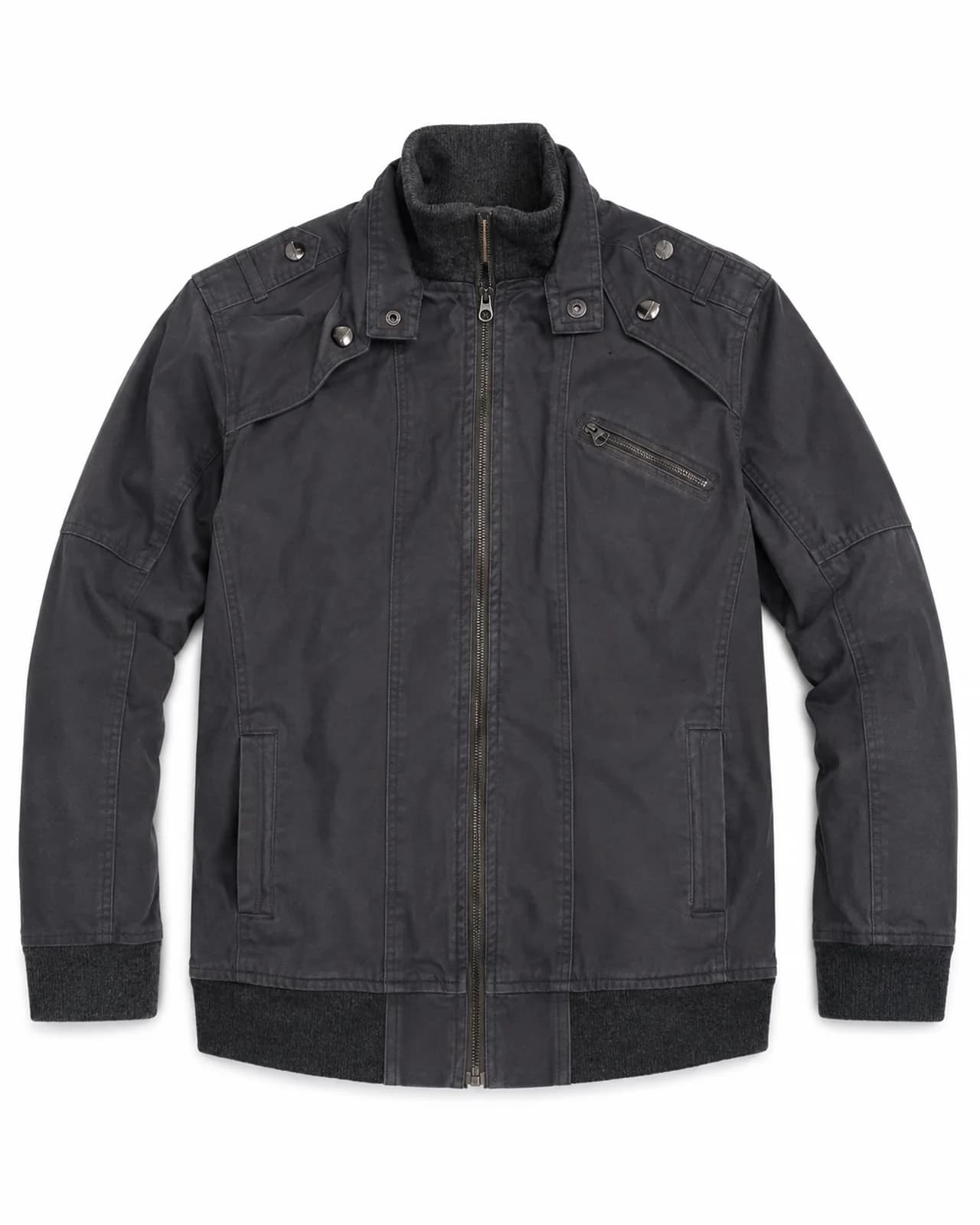 AI render
In short
A work jacket is specified by its shell fabric, lining and insulation, closures, pockets, cuffs and hem, and any performance claim. Water-repellent and waterproof are different claims: a repellent finish makes water bead on the surface, while a waterproof jacket needs a coated or membrane fabric and sealed seams. High-visibility and rain-protection claims are made against standards (EN ISO 20471 and ANSI/ISEA 107 for hi-vis, EN 343 for rain) and need certification.
8 min read
Written by the AHM International product development team
Updated November 2026. Every worked figure is checked by automated tests.
Shell fabrics
| Shell | Character | Typical use |
|---|---|---|
| Poly-cotton twill | Durable, comfortable, takes embroidery well | Work and utility jackets |
| Cotton canvas or duck | Very tough, stiff when new, softens with wear | Heavy-duty and chore jackets |
| Polyester oxford with coating | Light, water-resistant, inexpensive | Rain and winter jackets, hi-vis |
| Softshell | A woven or knit face bonded to a fleece back, stretchy and wind-resistant | Active work, cold weather without bulk |
Water: three different claims
| Claim | How it is achieved | How it is measured |
|---|---|---|
| Water-repellent | A durable water-repellent (DWR) finish on the face | Spray test (ISO 4920, AATCC 22); the finish weakens with washing |
| Water-resistant | A tighter fabric or a light coating | Hydrostatic head (ISO 811, AATCC 127), at a level the buyer sets |
| Waterproof | A coating or membrane plus taped or sealed seams | Hydrostatic head on fabric and seams; garments sold for rain protection in Europe are rated to EN 343 |
What a specification should state
- Shell
- Fabric, composition, weight and any finish or coating, with the test and level for any performance claim.
- Lining and insulation
- Mesh, taffeta, quilted or fleece lining; insulation by type and weight in g/m².
- Closures
- Zip type, gauge and puller, storm flap, press studs and their finish.
- Pockets
- Chest, hand, inside and sleeve pockets, with closures and reinforcement.
- Cuffs, hem and hood
- Rib, adjustable tab or elastic cuffs; hem drawcord; fixed, detachable or no hood.
- Visibility
- For hi-vis, the standard and class the jacket must meet, and the certified tape. See the callout below.
Hi-vis is a certified product
A jacket sold as high-visibility workwear must meet a standard such as EN ISO 20471 (Europe and UK) or ANSI/ISEA 107 (US), which set the area of background fabric and retroreflective tape, their colour and their performance. The finished garment is certified, not just its materials. Name the standard and class at the start.
Related questions
Water-repellent fabric makes water bead and roll off but lets it through under pressure. A waterproof jacket uses a coated or membrane fabric with sealed seams. Each is measured by a different test.
By type and weight per square metre, for example a polyester wadding of a stated g/m². The weight, the lining and the shell together decide warmth.
Not if it is sold as high-visibility workwear. Standards such as EN ISO 20471 and ANSI/ISEA 107 set the fabric, tape, areas and placement, and the finished garment is certified.
Send one specification and we will apply exactly this thinking to your style. Construction, materials and commercial FOB costing.