Buyer guide
Fleece or French terry, how heavy, which hood, which rib, and the details that decide whether a sweatshirt still looks right after twenty washes.
 AI render
In short
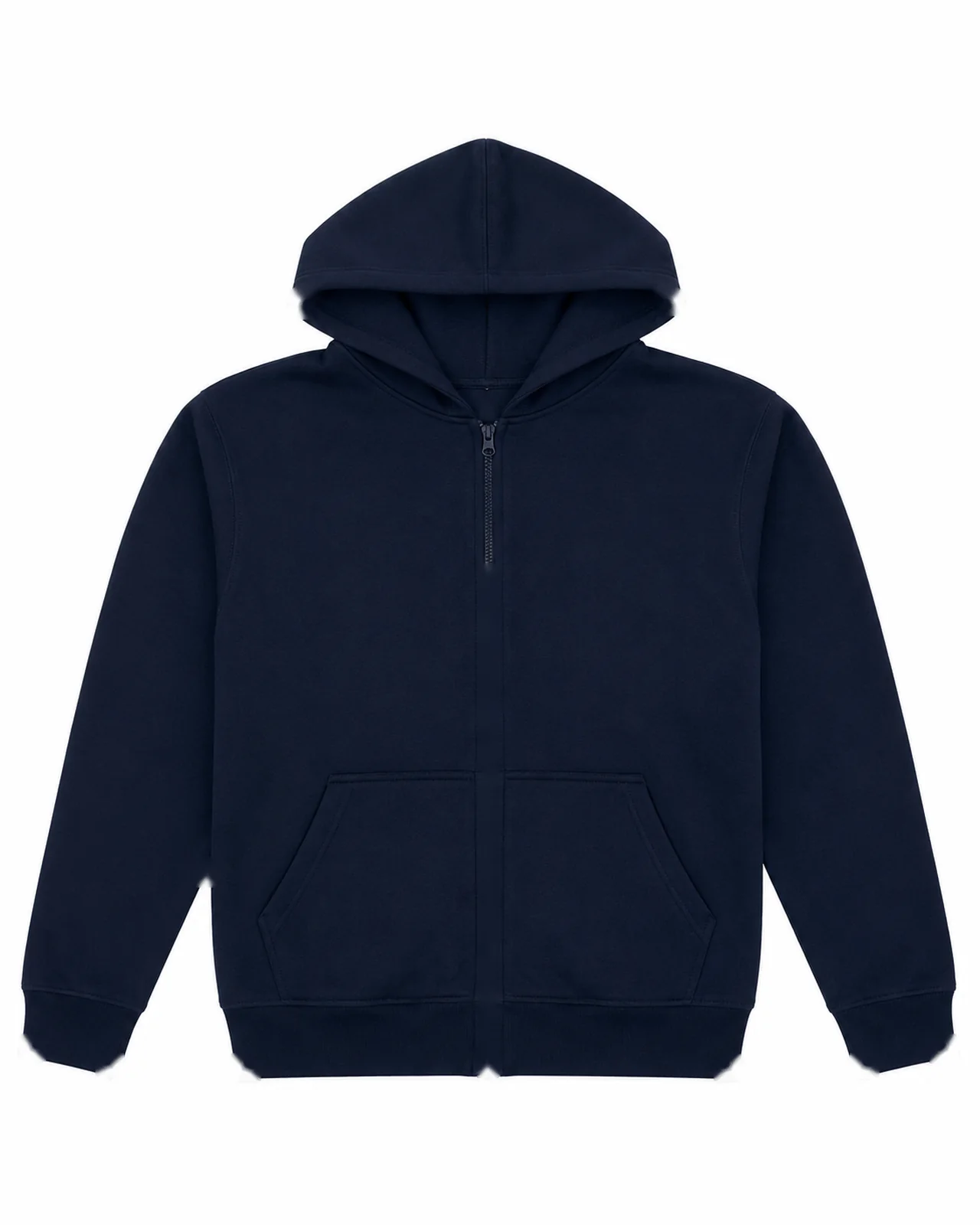
A hoodie or sweatshirt is specified by its fabric (brushed fleece, French terry or polar fleece), fibre blend, weight in gsm, hood construction, rib trims, pockets, closures and decoration. Most program sweatshirts fall between about 240 and 400 gsm. Pilling, shrinkage and rib recovery are the common failures, and all three are fabric decisions that should be tested on a washed sample.
7 min read
Written by the AHM International product development team
Updated November 2026. Every worked figure is checked by automated tests.
The three main fabrics
| Fabric | How it is made | How it feels and wears | Watch for |
|---|---|---|---|
| Brushed-back fleece | A knit with loops on the back that are brushed to raise a soft pile | Warmest of the three for its weight, soft inside | Brushing weakens fibres, so it can pill and shed; check pilling on a washed sample |
| French terry | The same looped back, left unbrushed | Lighter and cooler, loops visible inside, keeps its shape well | Less warm than fleece of the same weight |
| Polar fleece | Usually polyester, brushed and sheared on both sides | Light, warm, quick-drying, used for jackets and vests | Needs an anti-pill finish; low-grade polar fleece pills fast |
Weight bands
Typical ranges in the market, for orientation. A specification should state the weight and its tolerance.
| Band | Approximate weight | Typical use |
|---|---|---|
| Light | 240-280 gsm | Layering, warm climates, French terry tops |
| Mid | 280-340 gsm | Most uniform and promotional sweatshirts and hoodies |
| Heavy | 340-400 gsm and above | Premium retail, cold climates, outdoor work |
Fibre blend changes the garment
Cotton-rich fleece is soft and breathable but can shrink noticeably and fade. Polyester-rich blends hold colour and shape and dry faster, but polyester fibres are strong enough to anchor pills on the surface instead of letting them fall away. CVC (chief value cotton, more cotton than polyester) and 50/50 blends sit between the two.
For a printed program, the blend also decides the print method. Water-based and discharge inks suit cotton-rich fabric; a polyester-rich fleece may need inks that block dye migration. Decide the blend and the decoration together.
What a specification should state
- Fabric
- Construction (fleece, French terry, polar), fibre composition, weight with tolerance, and any finish such as anti-pill.
- Hood
- Two-panel or three-panel, single layer or lined, with or without drawcord, and the drawcord's ends and eyelets. Children's sizes have drawcord rules of their own.
- Body and sleeve
- Set-in or raglan sleeve, side seams or tubular body, side panels if any.
- Trims
- Rib type (1x1 or 2x2), composition including any elastane for recovery, and the depth of cuff and hem bands.
- Pockets and zip
- Kangaroo or split pouch pockets, zip type, length, gauge and puller, and any chin guard.
- Seams
- Overlock, coverstitch or flatlock, and where each is used.
- Decoration, labels and packing
- Method, size and position of each logo, label positions, and how garments are folded and packed.
Test the washed garment, not the new one
Shrinkage, pilling and rib recovery all show up after laundering. Ask for the sample to be washed to your care label several times and measured, and compare pilling against the method your buyer uses (ISO 12945-2 and ASTM D4970 are the common ones).
Work the numbers
Try it on your own fabric.
Related questions
Most program hoodies sit around 280-340 gsm. Lighter suits warm climates and layering; 350 gsm and above reads as premium and suits cold weather. Weight alone does not decide quality: fibre, yarn and finishing matter as much.
Both are knits with loops on the back. Fleece has the loops brushed into a soft pile; French terry leaves them as loops. Fleece is warmer; French terry is lighter and keeps its shape well.
Friction pulls fibre ends into small balls. Polyester-rich blends pill visibly because their strong fibres hold the pills on the surface. Anti-pill finishes and tighter yarns reduce it; test on a washed sample.
In many markets, no drawcords are allowed in the hood and neck of young children's garments. The US treats them as a hazard in sizes 2T to 12, and EN 14682 sets the rules in Europe. Check the destination market's rules before specifying.
Send one specification and we will apply exactly this thinking to your style. Construction, materials and commercial FOB costing.